Medicinal plants from Costa Rica

Costa Rica represents 0.4% of the world’s territory and contains 5% of the world’s biodiversity between flora and fauna. There are between 10,000 and 12,000 species of plants, of which about 300 species are used for medicinal purposes. Because plants are a part of our daily lives, we often underestimate them. Sometimes, even, those that grow in our garden or plants we have inside our house as decoration, are the medicinal plants that have the most use. These are the plants where the greatest economic benefit can be produced since their uses are abundant: ecological pesticides, natural medicine, cosmetics, and food supplements.

For example, aloe vera, Aloe Barbandensis, has more than 150 uses. One of the uses that stand out is its use in cosmetics as an anti-inflammatory and analgesic. It has a healing and regenerative component. It must be taken into account that in certain doses, aloe vera can be harmful. Likewise, it is essential to know and study it before consuming it. Aloe vera has more alkaline than any other plant. Taking into account that diseases are produced through the acidity of the body, it is an ideal preventative for many diseases.

Neem, (Azadirachta indica), a plant native to India and introduced to Costa Rica, is known to cure malaria and cancer. It is also used in the likes of toothpaste, and timber, among others.

It is essential that this knowledge does not fall into disuse or disappear. For this reason, it is important that it continues to expand and that we re-establish this exchange of cultivating plants for our benefit and the good of the ecosystems since gardens are home to many butterflies, bees, and birds such as hummingbirds.

One way to learn more about medicinal plants and their uses is to visit the Garden of Medicinal Plants at Biophilia. It has more than 90 species and the tour is offered with specialized guides on the subject.

Another common plants are the Achiote (Bixa orellana) which is used for headaches, neuralgia, asthma.; Chamomile (Chamaemelum nobile) as a digestive, sedative; Arnica (Arnica chamissonis) for sprains, and bruises; Ginger (Zingiber officinale) as an anti-inflammatory and cholesterol reducer or Comfrey (Symphytum officinale), as an emollient and healing agent.

Butterflies of Costa Rica - Biophilia Park

Bamboo Guadua

Guadua is the most important bamboo genus in Central and South America, endemic to this continent and made up of about 30 species. The Guadua angustifolia, native to Colombia, is the most important of these species, thanks to its properties such as resistance and flexibility. Its nickname is “vegetation metal” due to its strength.

These groups of Bamboo form the Guaduales that create spectacular forests, where they contribute to very dynamic ecosystems. A large amount of life is recorded inside these ecosystems, including a multitude of plants, mammals, birds, and reptiles.

These bamboo formations are very important, even in remote areas, since among their main functions, they are regulators of water flow, absorbing water when there is excess and releasing it little by little, limiting possible floods. They also prevent soil erosion and deforestation thanks to their underground root systems. The bamboo contributes a large amount of biomass to the land and is one of the largest environmental CO2 fixers on the planet with records of between 100 and 150 tons per hectare in each life cycle, in a duration of 4 to 5 years.

During its first 6 months, bamboo grows at a very high rate and can grow 19 cm per day, until it reaches its final height of 20 to 30 m. Each section of bamboo is called a culm. After about 4 years, the culm already has an opaque light green color, with an evident presence of lichens on its outer bark. The stem of bamboo has the ideal maturity for its use as structural material when it has the aforementioned characteristics. If cut and harvested correctly (on the first knot and without breaking it) a new culm begins to generate, so a new production is guaranteed.

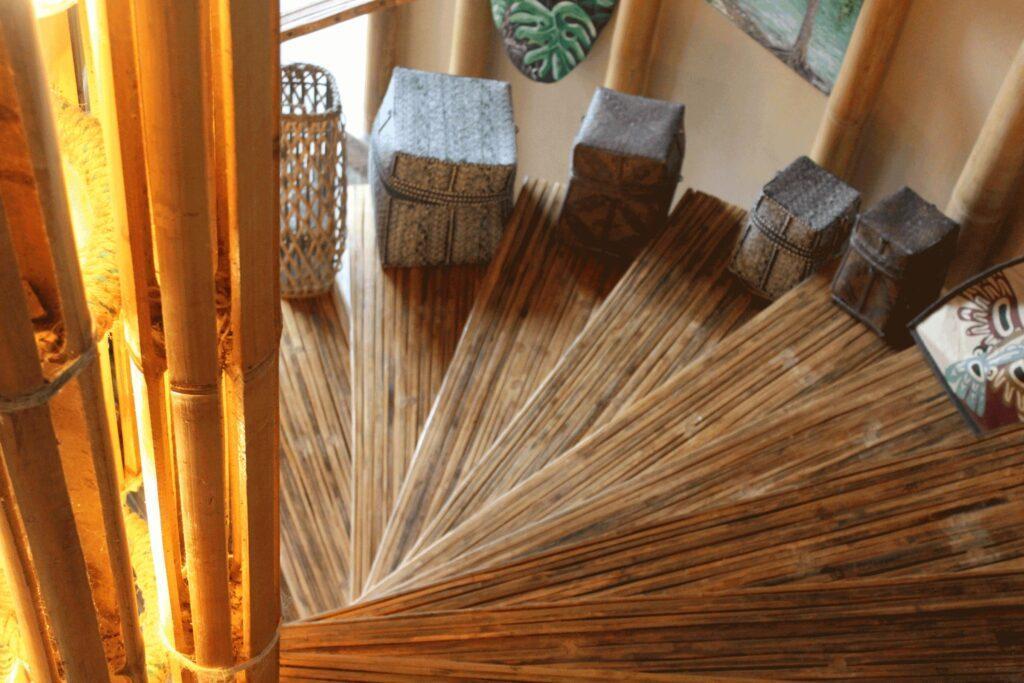
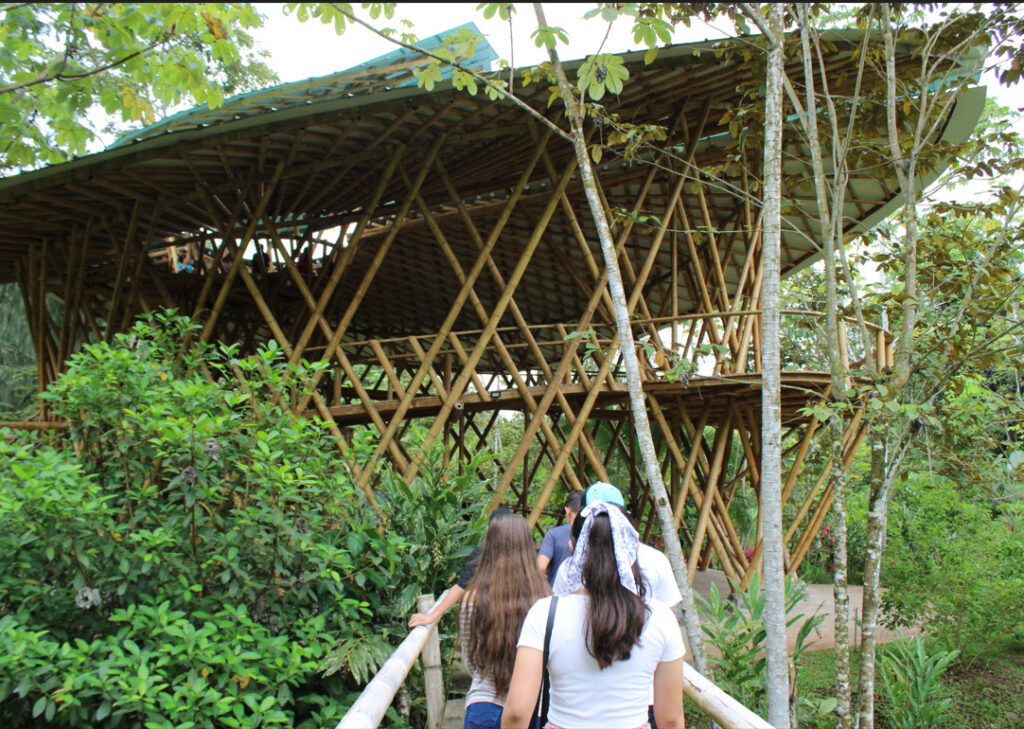
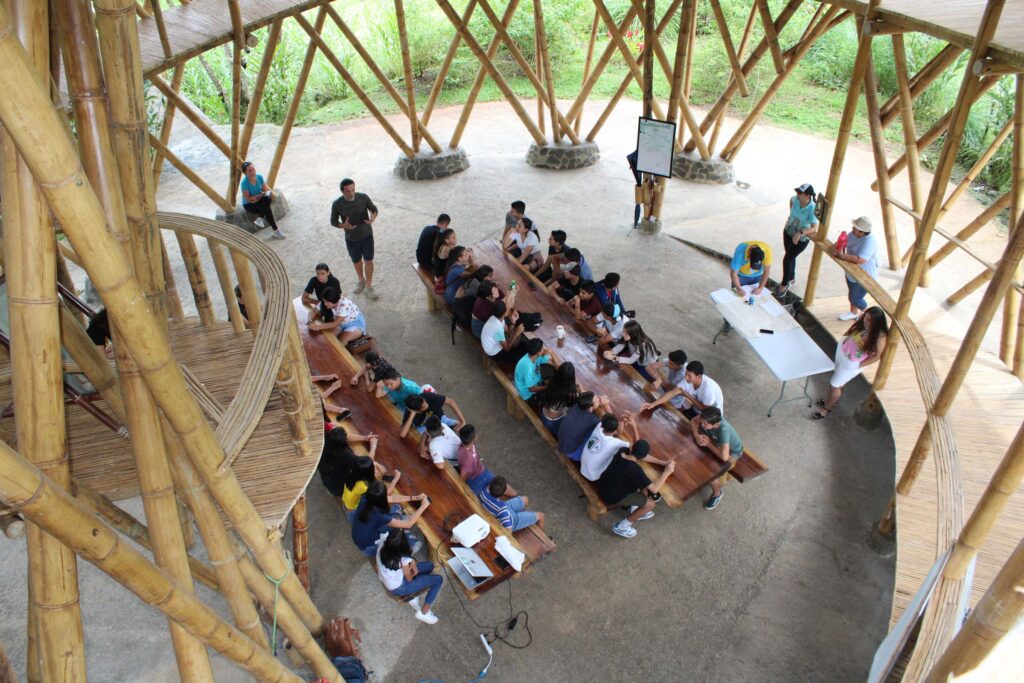
The result of this can be seen in the main building of Biophilia Park. A structure that combines all the traditions of bamboo and the innovation of clean energy such as solar panels.

Medicinal plants from Costa Rica - Biophilia Park
Biophilia Park
Medicinal plants from Costa Rica - Biophilia Park

The use of Guadua is not a modern invention. Since ancient times, our ancestors knew of its use. If we add modern technology to this equation, we are able to build wonderful structures with this material.

An example of this is Biophilia. Here you can see the impact that bamboo had on the project after the developer learned about it on many trips to Asia.

When deciding to start the project in Costa Rica, 30 years ago, one of the first things Biophilia did was to plant Guadua, since all the benefits of the material were very apparent.

After 25 years of ensuring a good crop, the developers of the Biophilia built their own workshop and currently use it to create new projects together with the advice of the world-renowned figure in the field of bamboo, Jorg Stamm, and local workers who are learning about this technique.

The 99% of bamboo is usable, since even the sawdust that is generated when cutting it is used as fertilizer for the medicinal garden or for the dry toilet that is located in the same building.

This serves as another example of a means by which to live more harmoniously with nature and build sustainably.

If you want to learn more about this project, visit biophiliapark.com

Butterflies of Costa Rica - Biophilia Park
Biophilia Park

Share this post

Reviews

There are no reviews yet. Be the first one to write one.

Related recommendations

Caño Island Snorkeling (CR Dive and Surf)
Biological Reserve

Caño Island Snorkeling (CR Dive and Surf)

The Caño Island Snorkeling (CR Dive and Surf) adventure tour will take you on an underwater
adventure to see marine life, vibrant coral, and stunning aquatic creatures. Caño Island is a
popular snorkeling destination in Costa Rica. Located off the Osa Peninsula, it is known for its
crystal-clear waters and abundant marine life.

Read More »
Butterflies of Costa Rica - Biophilia Park
Butterflies

Butterflies of Costa Rica

If you’re looking for the perfect way to watch the sunset while in Manuel Antonio, Quepos, Costa Rica, several tours can take you to the sea and give you a front-row seat to the stunning display.

Read More »
Off-Road Adventure Tour

Off-Road Adventure Tour

One of the best activities in Manuel Antonio for outdoor enthusiasts is the Off-Road Adventure Tour. This tour takes you on an exhilarating ride through the jungle and mountains. Tours are led by experienced guides who provide information about the local flora and fauna. We’ll also stop at waterfalls and scenic viewpoints to take pictures.

Read More »