Guadua is the most important bamboo genus in Central and South America, endemic to this continent and made up of about 30 species. The Guadua angustifolia, native to Colombia, is the most important of these species, thanks to its properties such as resistance and flexibility. Its nickname is “vegetation metal” due to its strength.
These groups of Bamboo form the Guaduales that create spectacular forests, where they contribute to very dynamic ecosystems. A large amount of life is recorded inside these ecosystems, including a multitude of plants, mammals, birds, and reptiles.
These bamboo formations are very important, even in remote areas, since among their main functions, they are regulators of water flow, absorbing water when there is excess and releasing it little by little, limiting possible floods. They also prevent soil erosion and deforestation thanks to their underground root systems. The bamboo contributes a large amount of biomass to the land and is one of the largest environmental CO2 fixers on the planet with records of between 100 and 150 tons per hectare in each life cycle, in a duration of 4 to 5 years.
During its first 6 months, bamboo grows at a very high rate and can grow 19 cm per day, until it reaches its final height of 20 to 30 m. Each section of bamboo is called a culm. After about 4 years, the culm already has an opaque light green color, with an evident presence of lichens on its outer bark. The stem of bamboo has the ideal maturity for its use as structural material when it has the aforementioned characteristics. If cut and harvested correctly (on the first knot and without breaking it) a new culm begins to generate, so a new production is guaranteed.
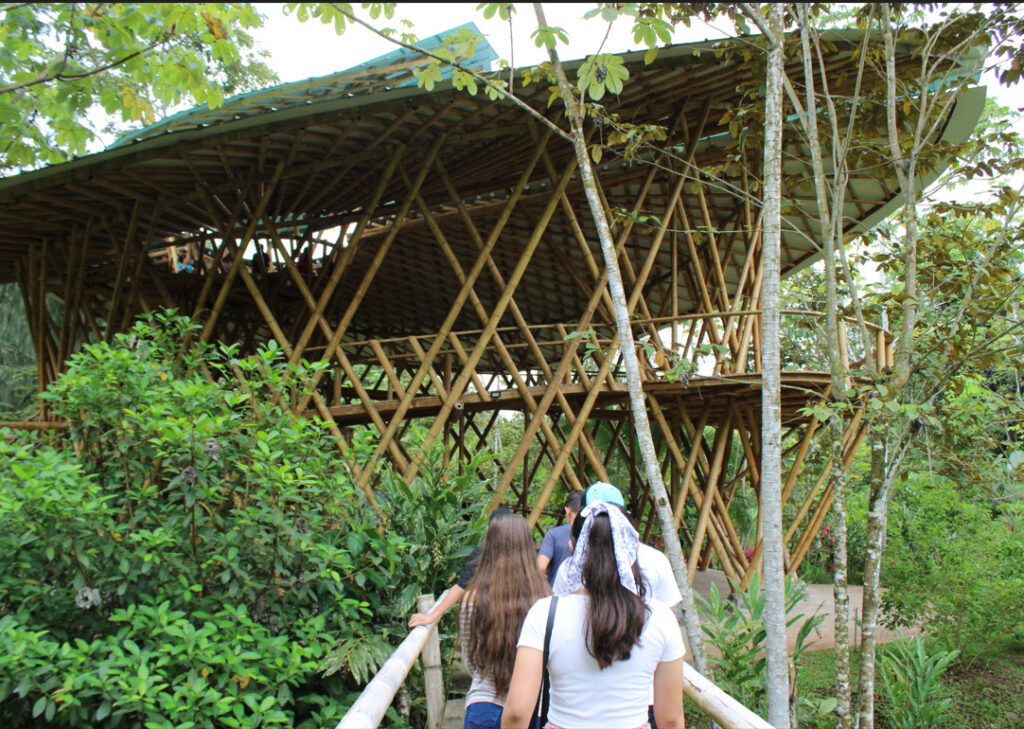
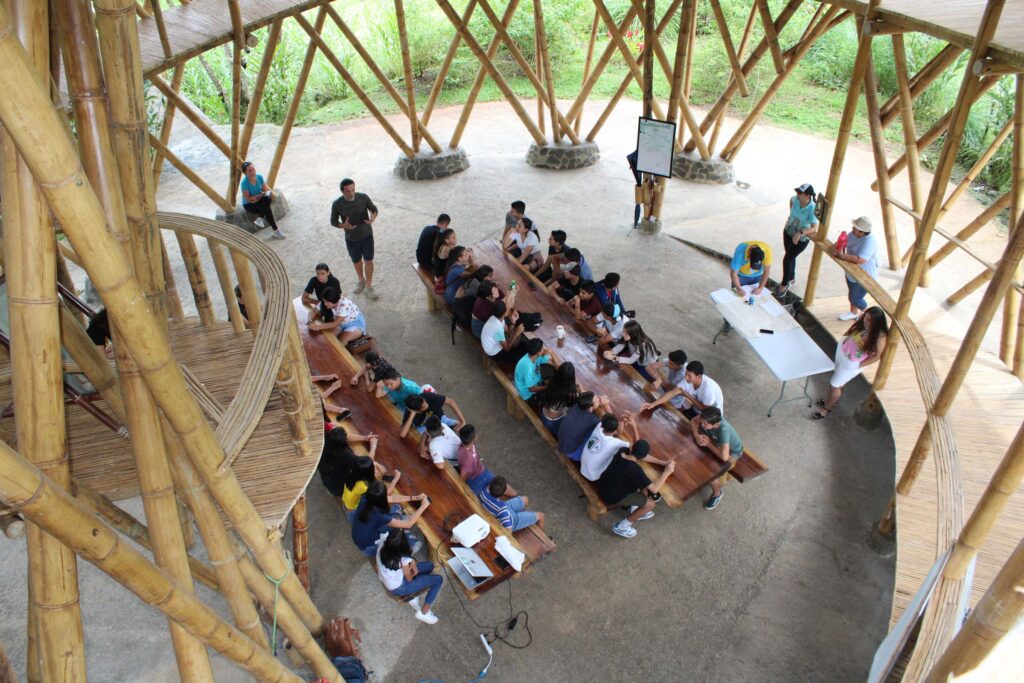
The result of this can be seen in the main building of Biophilia Park. A structure that combines all the traditions of bamboo and the innovation of clean energy such as solar panels.